Why Havent We Gone to the Moon Again
The Existent Reason We Haven't Been Back To The Moon
Nasa/Getty Images
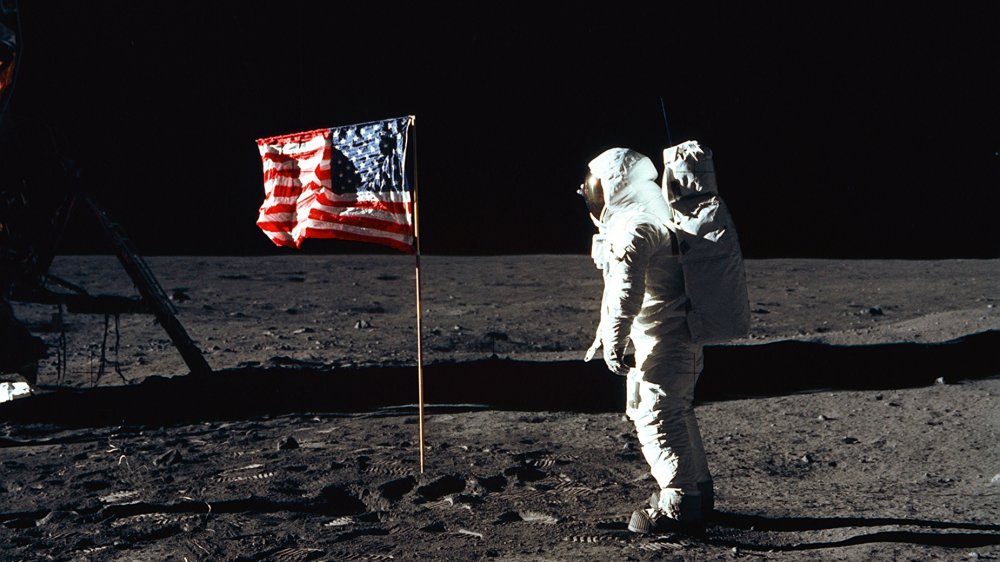
On July xx, 1969, 1 of the virtually momentous events in homo history occurred: Men walked on the Moon. It was the culmination of more than a decade of scientific, engineering, and political work and represents one of our greatest achievements. Eventually the U.s. completed half dozen Moon landings, bringing a full of 12 astronauts to the Moon's surface by 1972.
Then nosotros stopped.
It will shortly be five decades since a human being being has walked on the Moon's surface. Reverse to countless science fiction stories, nosotros don't take a Moon base. Contrary to a lot of optimistic opinions, we're not even very close to e'er going dorsum. Normally, the hardest part nearly getting from one place to some other is the starting time time; after that, the logistical problems have been solved and the trip becomes easier and easier. For example, one time Europeans figured out there was an enormous country mass between them and Bharat, going to and from the Americas quickly became routine.
So how come up that hasn't happened with the Moon? Although your starting time guesses are probably part of the explanation, in that location isn't only ane real reason we haven't been back to the Moon. In that location's a whole matrix of reasons keeping u.s.a. sadly Earth-jump.
The Cold War ended
The White House/Getty Images
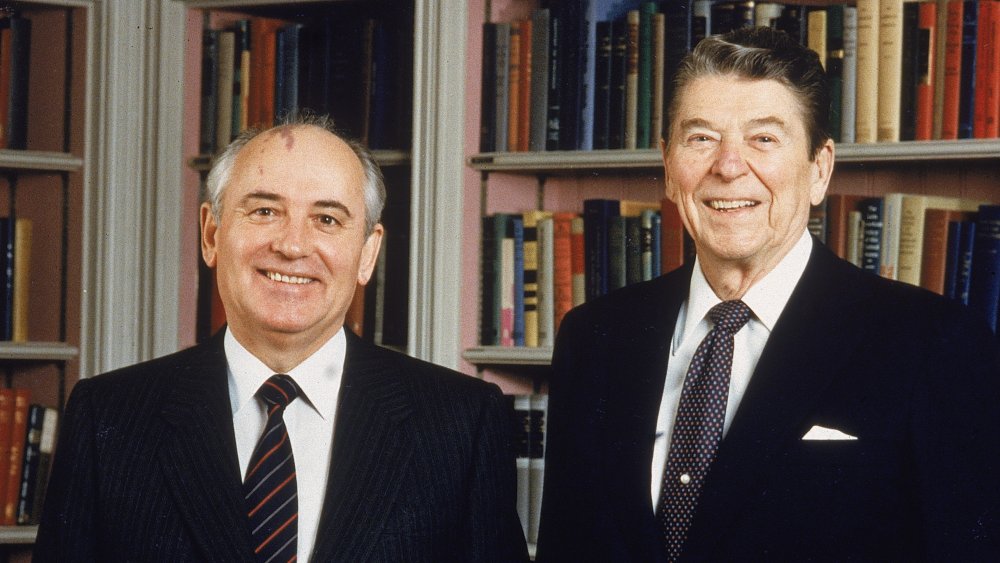
1 of the primal drivers of the USA's quest to land men on the Moon was a sense of competition with the Soviet Union. As Ars Technica reports, the Soviet Union poured money and expertise into their space program in the 1950s, and achieved several amazing fists. Sputnik was the kickoff artificial satellite orbiting Earth in 1957, and in 1961 Soviet pilot Yuri Gagarin became the first human being to orbit the Earth. By the early 1960s, it seemed obvious that the Soviets were going to be the first nation to state someone on the Moon.
The Cold War was in full gear, and the potential technological and strategic advantages such a feat would give the Russians was a concern. President Kennedy said in 1962 "This is, whether we similar it or non a race. Everything nosotros practice [in space] ought to be tied into getting to the Moon ahead of the Russians."
Equally noted by onetime NASA Principal Historian Roger Launius, the Space Race was really a proxy war betwixt the U.s. and the Soviet Union. Instead of deploying tanks and troops on Earth, the two countries deployed scientists and engineers in an endeavor to claim the Moon as their own—if only symbolically. Those Cold State of war conditions no longer exist, and so far, no country has risen to the same rivalry with the United states as the Soviet Wedlock had, removing a fundamental reason we went to the Moon in the beginning identify.
It's likewise politically risky
Shutterstock
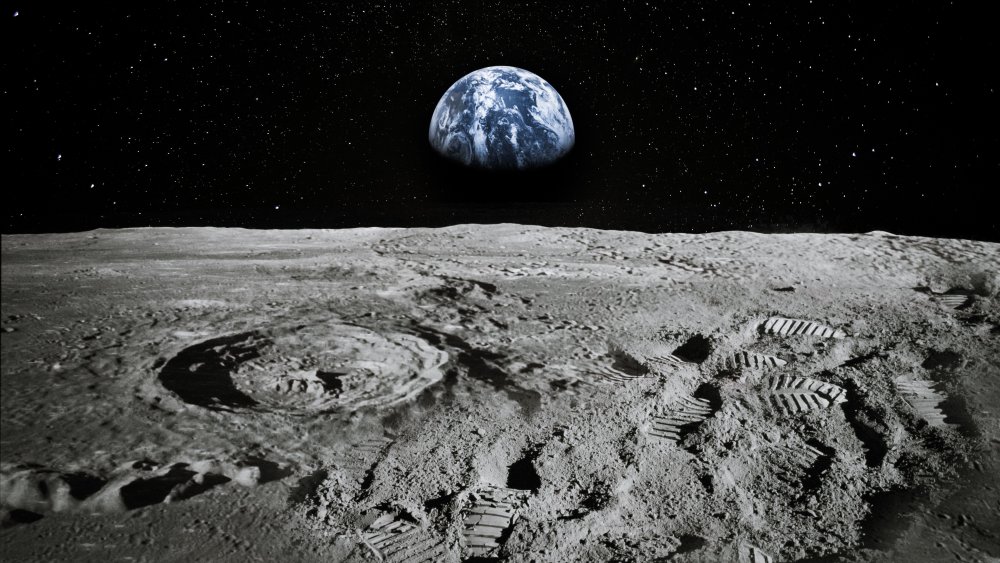
Information technology took more than a decade to get us to the Moon the first time. Information technology as well took an incredible amount of money and endeavour, both mental and physical. And it could accept gone wrong at whatsoever fourth dimension—technology could have failed, astronauts could have died, or a new president could accept simply canceled the project. The political risks were and then high it's really miraculous the project succeeded.
As Business Insider reports, those political risks take but gotten worse in the decades since our last visit to the Moon. Presidents have frequently suggested a render to the Moon, and NASA has come upwards with several plans to do so—but once the price tag shoots up and the challenges become clear, these plans are usually shifted to goals perceived as more practical.
That's the other problem: The benefits of going back to the Moon are largely theoretical. Scientific research is a primal reason to go back—simply at that place's no clear profit margin. A Moon base could be used as a refueling depot, only until there's a more than practical reason to get to and from the Moon—or to use the Moon as a layover on our fashion somewhere else—the risks associated with such a project are frightening. Put simply, no politician wants to accept their proper noun associated with an expensive boondoggle, or a tragic disaster.
The original moon landing was a PR stunt

Keystone/Getty Images
It's absolutely true that John F. Kennedy was the man who pushed for going to the Moon, citing the need to fight the Russians' efforts to dominate space. But the truth is a footling less inspiring. Because part of the reason President Kennedy pushed so difficult for the Space Program was his need for some practiced publicity after a serial of political disasters had his assistants reeling.
As CNET reports, Kennedy began his presidency convinced that a Moon landing would be far too expensive to seriously consider. Then he had a very bad, no skilful year in 1961. The Soviet Wedlock fabricated the USA look bad when they put Yuri Gagarin in orbit around the World. That fabricated the United states look weak, and fabricated the statement that we couldn't beget to go to the Moon wait kind of empty-headed.
Then Kennedy greenish-lit the Bay of Pigs Invasion. This was a disaster for Kennedy. It was so poorly organized and incompetently executed, it made Kennedy expect actually, actually bad. It changed his attitude towards his military leaders and advisers, and information technology forced him to look for a way to change the chat. Announcing a bold "Moonshot" mission was ideal. It made him look like a visionary leader and it made the USA look like a technological superpower. If you desire us to get back to the Moon, we might need a new political disaster.
The moon landing wasn't designed for repetition
Shutterstock
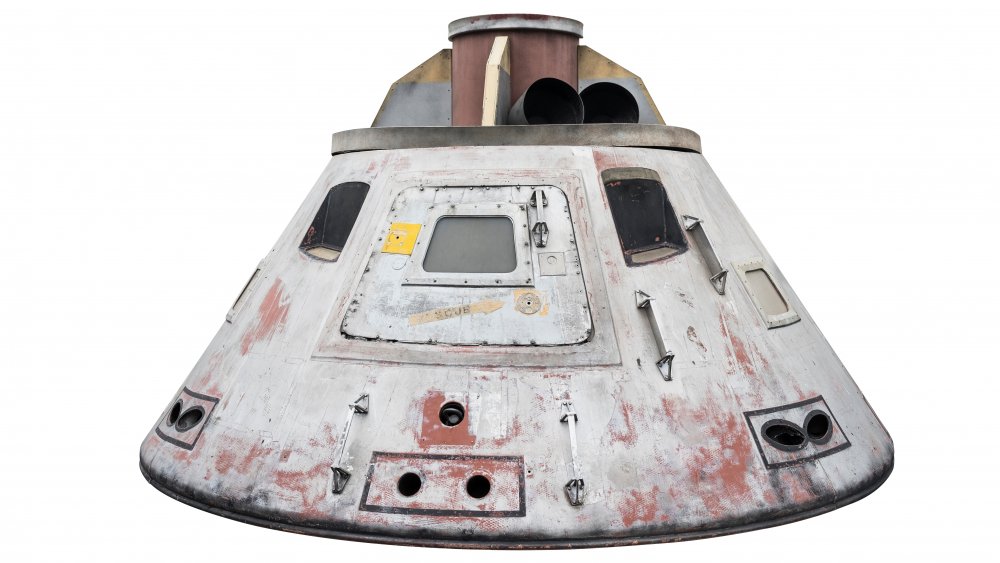
Landing on and strutting effectually the Moon in 1969 was an incredible feat. Sure, it toll a tremendous amount of money and effort, but you'd be forgiven for assuming that one time nosotros've achieved a goal like this, it must get easier to practise.
Unfortunately, yous're wrong—and that's 1 big reason we haven't been back since the end of the original Apollo Program in 1972. As noted by the MIT Applied science Review, because the original Moon landing projection was positioned as a "race" against the Soviets, the project wasn't designed for efficiency. Shortcuts were used wherever possible, and no one thought to build sustainable supply chains. The end upshot is a system where the equivalent of 2 or three colossal jets' worth of technology and engineering is just burned upwardly or thrown away, never to be used once again.
In other words, the whole system of getting people to the Moon was never designed for repetition. Information technology's actually amazing nosotros ran 17 Apollo missions and got to the Moon six times using it. If nosotros want to go serious near going dorsum, nosotros'll demand to pattern a sustainable, efficient system for doing so. Don't hold your breath; in 2007 Google announced the X Prize, offering $20 million to the first non-governmental organization to complete a lunar landing. Since then simply three crafts have landed on the Moon—all authorities projects, none crewed.
The original Apollo designs were barely condom
Shutterstock
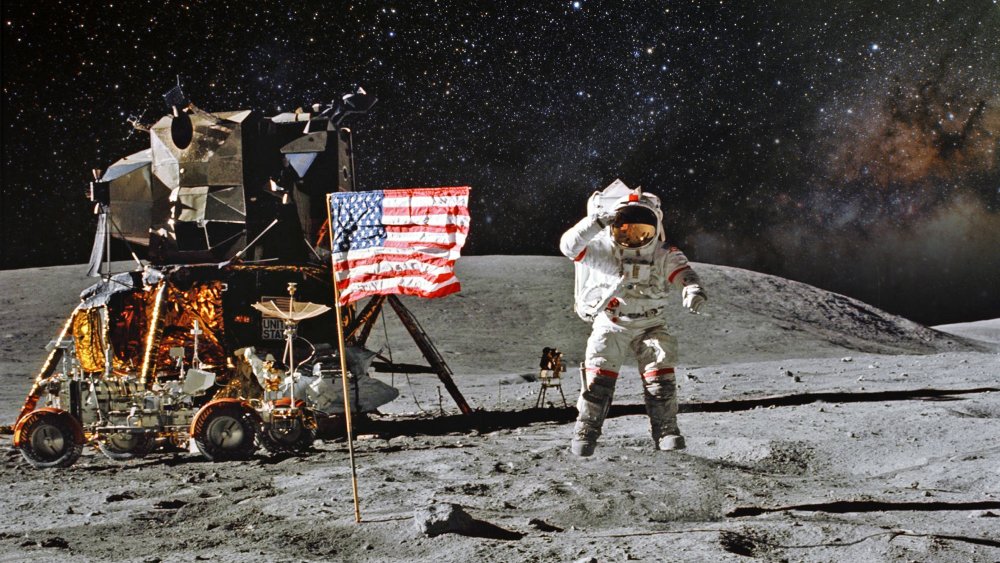
Since 1969 we've managed to put a total of twelve people on the Moon. That'south incredible, simply even more incredible is the fact that they all survived the trip. Put simply, getting to the Moon and back is incredibly dangerous, and the danger is exacerbated by the fact that Apollo craft pattern could be described as taking a "minimally-feasible" approach to prophylactic.
As Buzzfeed News reports, the frantic race to put men on the Moon led to a lot of corner-cutting in terms of the technology and engineering used. After the 1969 Moon landing, the sense of urgency that collection the project evaporated. Nosotros'd beaten the Soviet Union to the Moon, afterward all, and every subsequent Apollo mission seemed to underscore how little we got back out of these expensive and stress-inducing missions.
It all came to a head in 1970 when the Apollo thirteen mission went horribly wrong. An explosion jettisoned the crew's oxygen supply and damaged the module, leading to a tense, frightening trip domicile in a crippled ship. While the astronauts returned safely, the incident underscored the fact that the Apollo spacecraft was, in the words of historian John Logsdon, beingness pushed "correct upward to the edge of its safe performance." Not long afterwards, President Nixon cut funding for the Moon landings and shifted NASA'due south focus to cheaper, safer projects: Skylab and the Space Shuttle.
We need improve technology
Handout/Getty Images
Engineering science is ever advancing, right? We managed to put together spacecraft that carried astronauts to the Moon and so got them domicile rubber and sound in 1969. Surely the last 5 decades have seen some incredible advances in the applied science needed for such a mission?
If yous're talking virtually computers, the respond is yep. The computers on the Apollo lunar modules were incredibly basic compared to today'south hardware. In fact, as Real Clear Science notes, the smartphone in your pocket is probably 100,000 times more powerful than the reckoner in the Apollo spacecraft. Heck, some calculators released in the 1980s were more powerful.
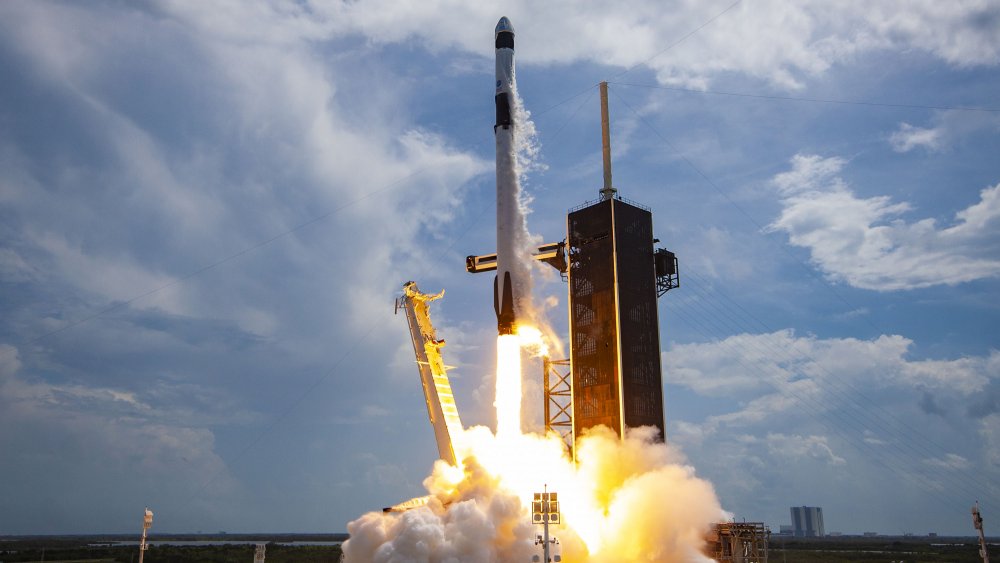
But computers are just office of the applied science required to get people to and from the Moon—and their express capabilities were past blueprint, as they needed to be extremely efficient in society to apply very little electricity. And every bit noted in Forbes, much of the hardware used in the Apollo missions remains state-of-the-fine art—and this technology was barely good enough to become u.s. in that location and keep everyone alive back then. The lack of serious advances tin can exist seen in how similar today's Infinite X launches are to the launches in the 1960s—non much has changed. And that'due south 1 huge barrier to going back to the Moon.
Presidents aren't patient

Max Mumby/indigo/Getty Images
Legacy is e'er on politicians' minds. John F. Kennedy officially launched the mission to state on the Moon in 1962. Past the time we actually accomplished it in 1969, he had been assassinated—just he would have been out of function even if he'd lived, thanks to term limits. Richard Nixon, who Kennedy had defeated in the 1960 election, was the human who got to relish in the publicity generated past the Moon landings.
That makes presidents hesitate. As Lifehacker notes, since it can take a decade—or more than—to fund, design, build, and examination something as complex as a Moon landing, whatever president that pushes for such a projection is guaranteed to be out of office past the time information technology reaches fruition. In today'south political climate where presidents are never not campaigning, that'due south intolerably long to wait. And incoming administrations—especially if they're of the opposing party—have a habit of canceling big projects put into motion past their predecessors precisely to deny them the credit.
In fact, Buzz Aldrin, the 2nd human being on the Moon, has argued pretty plainly that the only way we're getting back to the Moon is if both political parties in this state put bated their differences. "I believe it begins with a bi-partisan Congressional and Administration commitment to sustained leadership," the legendary astronaut said, and he's not wrong.
The Challenger and Columbia disasters
Shutterstock
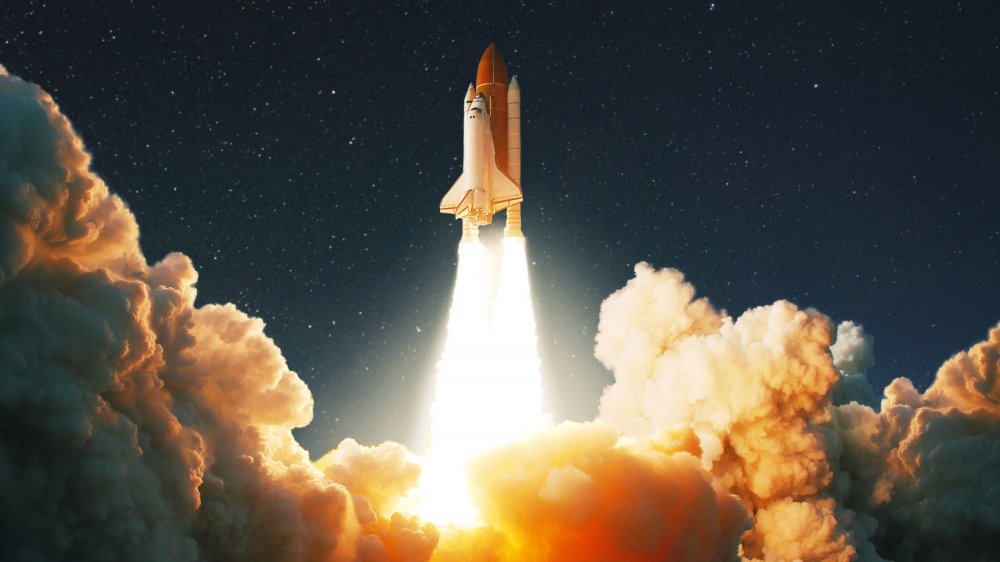
Every bit Buzzfeed News notes, the Space Shuttle program was pushed forward in the 1970s considering it would be cheaper than landing on the Moon—and safer. The Infinite Shuttle program might accept been a step dorsum from the incredible accomplishment of putting people on the Moon, but it kept humans in infinite and served an incredibly of import purpose both in preserving the U.s.a.'s position as a leader in space exploration and people's excitement about it.
When the Space Shuttle Challenger exploded on takeoff in 1986, it was a horrifying moment that chilled the entire nation. Every bit Space notes, that event led to changes in how NASA worked and how the Space Shuttle program was used. Information technology was scaled dorsum, and some of the missions the Shuttle was performing were shifted back to older, more than reliable technologies.
Then, in 2003, the Space Shuttle Columbia disintegrated when returning to Earth. As PBS reports, this 2d disaster had a much broader effect on the space program. President Bush and his assistants question whether information technology was worth putting human lives in danger by putting them routinely into space. This new, more cautious mental attitude pretty much concluded any take chances of a serious effort to render to the Moon—such a mission suddenly seemed far too unsafe.
Making the moon pay is hard
Shutterstock
Like it or not, nosotros're a backer society. Projects are pitched with a render on investment—and putting people on the Moon but doesn't offer any kind of profit. In fact, when you consider how much incredibly expensive technology winds up burning up and crashing into the body of water, never to exist used again, information technology runs into negative numbers by a wide margin.
At that place are some possible ways the Moon could be fabricated into a turn a profit-making functioning, which would attract investors and corporate coin to the project. As noted past Space, the Moon is a rich source of helium-iii, a rare—and finite—element that could one twenty-four hour period exist a tremendous source of ability. And the Moon could likewise be gear up as a stopover point for longer trips. For instance, a manned mission to Mars could wing to the Moon, refuel, and have a much better chance of arriving safely on the Red Planet.
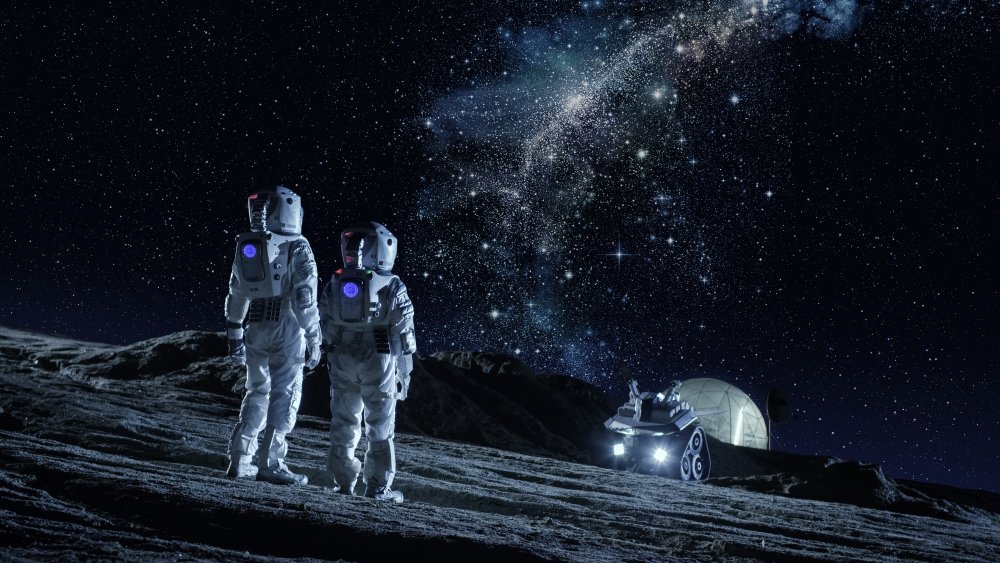
Only for either of those scenarios to make sense, we'd need a permanent Moon base of some sort. According to Yahoo Finance, estimates on the cost to establish a "basic" sort of base of operations run to the $100 billion range—and maintaining just iv astronauts in such a base would cost $36 billion a year. And that's earlier setting up the equipment and infrastructure for mining or refueling operations. That means making whatsoever sort of profit is nearly incommunicable—and then enthusiasm for a return remains low.
New resources opening on World

Shutterstock
1 major reason that plans to render to the Moon take been put on hold is that the resource necessary for such a massive undertaking are needed much closer to home. In the Chill, specifically.
As CNBC reports, climate change is quickly transforming i of the most inhospitable areas of the globe, the Arctic Circle, into a rich source of new, resource-packed territory. It'southward estimated that oil and natural gas reserves worth equally much as $35 trillion are waiting under the ice, and the Us is locked in a race with both Russia and China to secure every bit much of the area as possible. Much of the money and engineering brains that might be working towards a new moonshot are instead working on this problem instead.
The similarities between the challenge of edifice a base on the Moon and locking downwards the rights to the Chill are so strong, in fact, that Wired reports that the race to control the Arctic is viewed every bit a dry run of sorts for the eventual race to control the Moon. There are already legal arguments forming that the way things are handled in the Arctic as it opens up should be a model for how disputes might be handled in the future on the Moon. But we won't get to the Moon until we sort out the much more pressing—and more than local—issues here first.
The focus is on Mars
Shutterstock
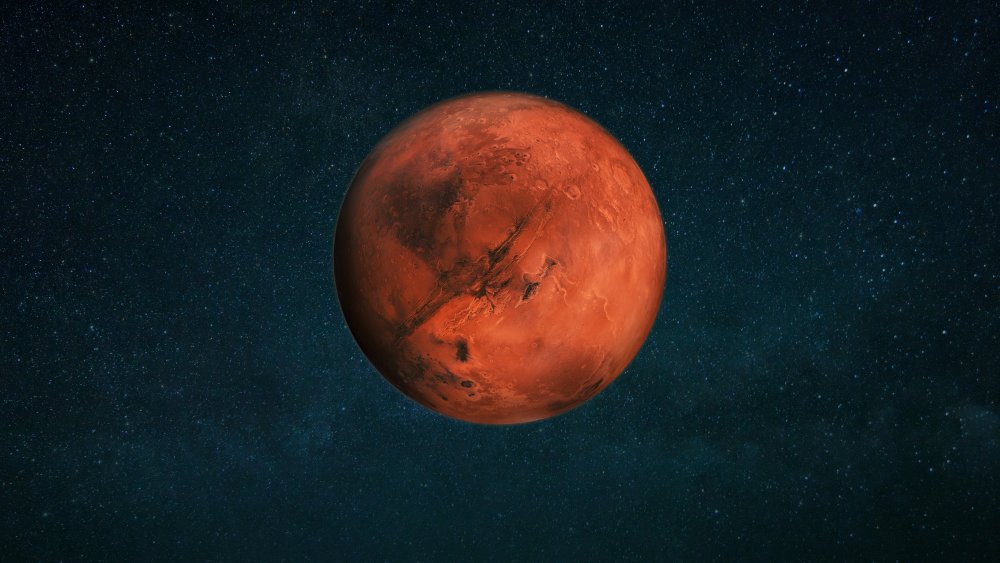
"Been there, done that" doesn't seem like it would be a viable political or scientific mental attitude, only it sums up the bones attitude of many when information technology comes to the Moon. In fact, many people in the government and in space-related agencies call back we should be focusing on Mars as a priority.
Every bit Scientific American reports, the Business firm of Representatives' Committee on Scientific discipline, Infinite, and Engineering introduced a bill this year to make exploration of the ruddy planet NASA'due south official stretch goal. Non only is Mars a much more valuable destination in terms of scientific research and expanding our understanding of the universe, it's too a goal that has captured the public's imagination.
That doesn't mean going dorsum to the Moon is completely off the table, however. As The Atlantic reports, virtually experts concur that the but style we're going to get human beings to Mars reasonably safely is if we build a relay station of sorts on the Moon. Astronauts would travel from the World to the Moon, refuel and make other preparations, then launch from the Moon to Mars, simplifying the logistics of the trip. Merely that means that nosotros're still not going back to the Moon until someone puts some serious money, talent, and other resources behind a trip to Mars.
The global pandemic is slowing things down

Shutterstock
The global pandemic has blest us with toilet newspaper shortages, mask requirements, and endless Zoom meetings. Now there'due south one more thing you can arraign on the novel coronavirus: A lack of progress on going back to the Moon.
When NASA appear plans to get American astronauts back on the Moon past 2024, many thought it was overly optimistic—but even if the schedule slipped, information technology was an exciting development. As Reuters reports, the program to go back to the Moon led to serious work on creating a next-generation rocket chosen the Space Launch Organisation (SLS), forth with a new crew module called the Orion. The programme has hitting some bumps—information technology's already $2 billion over budget—but it was scheduled to exist tested for the start time this year.
Only only similar every other industry, the aerospace world has been hitting by the global pandemic. NASA recently announced information technology would be forced to shut down two of import facilities: The Michoud Associates Facility and the Stennis Space Center in Mississippi. The closures were necessary because employees there tested positive for the coronavirus. The shutdowns have had a big impact: NASA had to officially append the SLS programme for the time beingness, dealing a serious blow to any chances of a return to the Moon.
Source: https://www.grunge.com/247837/the-real-reason-we-havent-been-back-to-the-moon/
0 Response to "Why Havent We Gone to the Moon Again"
Post a Comment